
Tag: crusty no-knead bread

  • Crusty Cranberry Nut No-Knead Bread

    Crusty Cranberry Nut No-Knead Bread

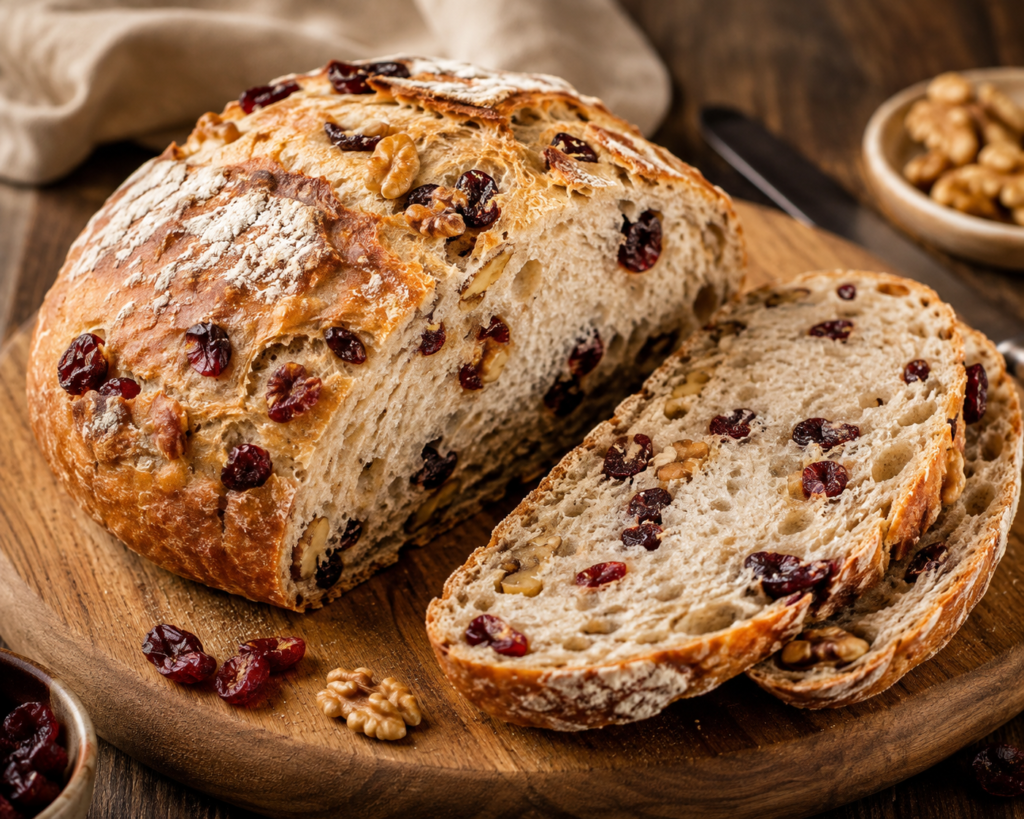
    no-knead cranberry walnut bread

    No-Knead Cranberry Walnut Bread

    There is nothing quite like pulling a loaf of crusty, golden bread out of the oven, and this no-knead cranberry walnut bread makes it almost impossible to get wrong. The crust shatters when you slice into it, the crumb is soft and chewy, and every bite is dotted with tart cranberries and toasted walnuts. Best of all, you don’t need a stand mixer, kneading skills, or hours of active work — just a bowl, a spoon, and a little patience while the dough rises overnight.
    This recipe is built on the classic no-knead bread method that home bakers have relied on for years, adapted here with dried cranberries and walnuts for a loaf that feels perfect for fall and winter baking, holiday breakfasts, or simply upgrading your everyday sandwich bread. If you’ve been searching for a no-knead cranberry walnut bread recipe that actually works on the first try, this is the one to bookmark.

    Why This Recipe Works

    ⦁ The long, slow rise (12–18 hours) does the work that kneading normally would, developing gluten with almost no effort from you.
    ⦁ A hot Dutch oven traps steam around the dough, giving the loaf a bakery-style crust without any special equipment.
    ⦁ Toasting the walnuts before mixing them in deepens their flavor so they don’t taste flat against the tart cranberries.
    ⦁ The dough comes together in one bowl in about 10 minutes, so the hands-on time is genuinely minimal.

    Ingredients You’ll Need

    This recipe makes one round loaf, about 12 slices. Exact measurements are listed in the recipe card below, but here’s what you’ll be working with:
    3 cups (375 g) all-purpose flour
    ⦁ 1 3/4 teaspoons fine salt
    ⦁ 1/2 teaspoon instant yeast
    1 1/2 cups (355 ml) cool water
    ⦁ 3/4 cup (85 g) dried cranberries
    ⦁ 3/4 cup (85 g) walnuts, roughly chopped and lightly toasted
    ⦁ Extra flour or cornmeal, for dusting

    Ingredient Substitutions

    This bread is forgiving. Use the table below if you need to swap an ingredient based on what’s in your pantry.

    IngredientPossible SubstituteNotes
    Dried cranberriesRaisins, dried cherries, or dried blueberriesUse any dried fruit of similar size; no need to soak
    WalnutsPecans or omit entirelyToast nuts first for the best flavor
    All-purpose flourBread flourBread flour gives a slightly chewier crumb; use the same amount
    Instant yeastActive dry yeastUse the same amount, but dissolve in the water for 5 minutes first
    Dutch ovenHeavy oven-safe pot with a lidAny tightly-lidded, oven-safe pot works; a cast-iron pot browns best

    How to Make No-Knead Cranberry Walnut Bread

    Below is the quick overview of the method. Full ingredient amounts and printable instructions are in the recipe card near the bottom of this article.

    Mix the dough

    1. Mix the dough
      Stir together flour, salt, and yeast, then add cool water and mix just until no dry flour remains. Fold in the cranberries and walnuts. The dough should look shaggy and wet, not smooth — that’s normal for no-knead bread.

    Let it rise, low and slow

    Cover the bowl and leave it at room temperature for 12 to 18 hours. This is the step that replaces kneading. You’ll know it’s ready when the surface is bubbly, the dough has roughly doubled, and it looks loose and webby.

    Shape and proof

    Fold the dough into a rough ball on a floured surface, let it rest briefly, then shape it into a tight round. A second rise of 1 to 2 hours gives the loaf its final structure before baking.

    Bake in a hot Dutch oven

    Baking covered for the first 30 minutes traps steam and creates that crackly, crisp crust. Removing the lid for the final 15 to 20 minutes lets the crust turn deep golden brown.

    What the Dough Should Look Like

    After mixing, the dough will be sticky, rough, and almost batter-like in places — resist the urge to add more flour. After the long rise, it should have visibly doubled, feel airy when you lift the bowl, and hold together in stretchy strands when you pull a spoon through it. If it still looks tight and smooth after 18 hours, your kitchen is likely too cold, and it needs more time.

    Expert Tips for the Best Crust and Crumb

    ⦁ Use a kitchen scale for the flour if you have one — measuring by volume is the most common source of a dense loaf.
    ⦁ Let the Dutch oven preheat fully for the full 30 minutes; a pot that isn’t hot enough won’t give you that crackling crust.
    ⦁ Score the dough confidently in one quick motion right before it goes into the pot, so the loaf expands evenly as it bakes.
    ⦁ Cool the bread completely before slicing — this can be the hardest tip to follow, but it protects the texture of the crumb.

    Common Mistakes to Avoid

    ⦁ Skipping the first long rise, which leaves the dough under-developed and the crumb dense.
    ⦁ Using a cold kitchen without adjusting the rise time, which slows fermentation significantly.
    ⦁ Adding raw walnuts straight from the bag — toasting them first makes a noticeable difference in flavor.
    ⦁ Slicing into a warm loaf, which can make the crumb gummy instead of tender.

    Variations to Try

    Orange-Cranberry Walnut Bread: add 1 tablespoon of orange zest to the dough for a bright, citrusy note.
    Cinnamon Cranberry Bread: add 1 teaspoon of ground cinnamon along with the flour.
    ⦁ Seeded Crust: brush the shaped loaf with water and roll it in oats or sesame seeds before baking.
    ⦁ Herbed Version: swap the cranberries and walnuts for rosemary and pecans for a savory take on the same base dough.

    Serving Suggestions

    This loaf is delicious on its own with a smear of salted butter, but it also holds up well as a base for sandwiches, especially with turkey, brie, or sharp cheddar. Toasted slices make an excellent match for soups and stews, and it’s a lovely addition to a holiday breadbasket alongside honey or fruit preserves.

    How to Store and Freeze

    Store the cooled loaf at room temperature, cut-side down on a cutting board or in a paper bag, for up to 3 days. Avoid storing it in plastic if you want to keep the crust crisp, since plastic traps moisture and softens it. For longer storage, slice the bread and freeze it in an airtight bag for up to 3 months; pull out individual slices and toast them straight from the freezer.

    Troubleshooting

    My dough didn’t rise much overnight.

    This is almost always a temperature issue. If your kitchen is below 68°F, the rise will take longer — give it a few extra hours rather than moving to the next step early.

    My crust turned out soft instead of crisp.

    This usually means the Dutch oven wasn’t fully preheated, or the lid was removed too early. Make sure the pot heats for the full 30 minutes and keep the lid on for the entire first half of baking.

    My loaf spread out flat instead of holding its shape.

    A flat loaf typically means the dough was under-proofed at the shaping stage or handled too gently when forming the round. Shape it firmly, with enough tension on the surface to hold its structure through the second rise.

    Frequently Asked Questions

    Can I use fresh or frozen cranberries instead of dried?

    Dried cranberries are best here because they hold their shape and won’t add extra moisture to the dough. Fresh or frozen cranberries release liquid as they bake and can make the crumb dense and gummy, so they are not recommended for this recipe.

    Do I really need a Dutch oven?

    A Dutch oven is what creates that shatter-crisp crust, because the lid traps steam around the dough as it bakes. If you don’t have one, any heavy, oven-safe pot with a tight-fitting lid will work in its place.

    Can I speed up the rise if I don’t have 12 to 18 hours?

    The long, slow rise is what builds flavor and structure in no-knead bread, so it isn’t a step to skip. If you’re short on time, you can shorten the rise to about 8 hours by increasing the yeast to 3/4 teaspoon, though the flavor will be slightly less developed.

    Why did my loaf turn out dense or flat?

    A dense loaf almost always means the first rise wasn’t long enough, or the dough was resting somewhere too cold. Look for a dough that has visibly doubled and is full of bubbles before you shape it; if it isn’t there yet, give it more time rather than moving on.

    Can I add orange zest or spices?

    Yes. A tablespoon of orange zest, a teaspoon of cinnamon, or a pinch of ground cardamom all pair beautifully with the cranberries and walnuts, and can be folded in at the same step as the fruit and nuts.

    Related Recipes on Iwannabake.com

    If you enjoyed this recipe, you may also like:
    ⦁ Classic No-Knead Bread Recipe for Beginners
    Small Batch Brownies for When You Don’t Want a Full Pan
    Banana Bread Without Eggs
    2 Banana Banana Bread
    ⦁ Why Did My Cookies Spread? Common Baking Problems Explained