
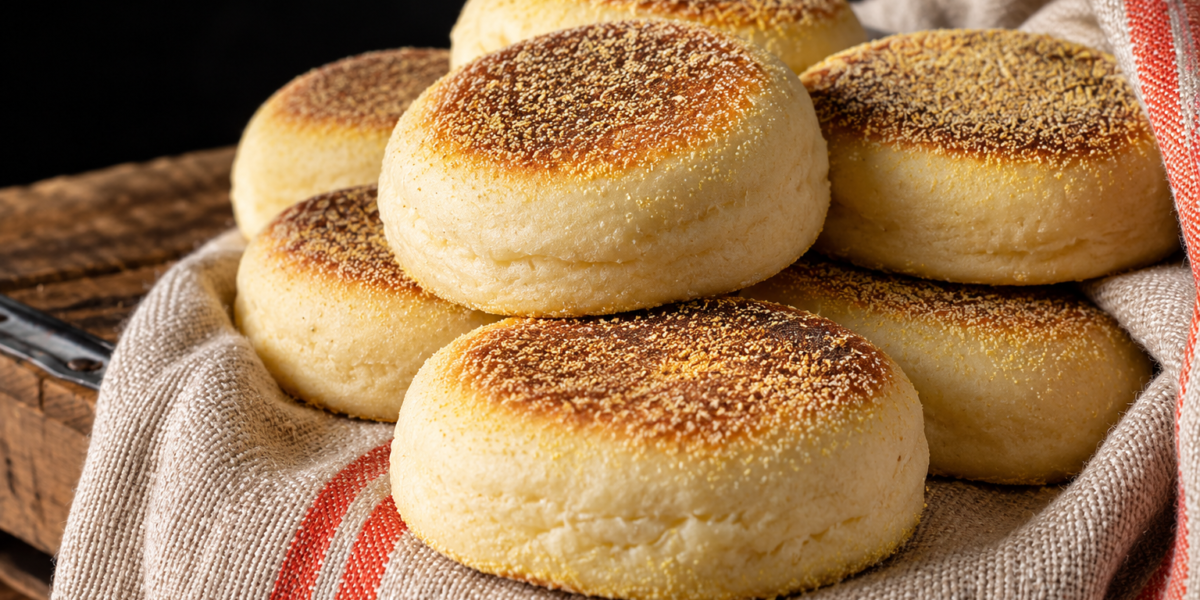
Store-bought english muffins are fine. Homemade sourdough english muffins are a different breakfast entirely: chewy, a little tangy, and full of craggy pockets built to trap melted butter. 🥣
This recipe uses an active sourdough starter, an overnight rest, and a dry skillet. No oven, no special equipment, and most of the work happens while you sleep.
Quick answer: To make sourdough english muffins, mix active starter with milk, flour, butter, sugar, and salt. Let the dough ferment overnight, knead in a little baking soda, cut 3-inch rounds, and cook them on a medium-low griddle for about 7 minutes per side. The recipe makes 10 muffins and needs about an hour of hands-on time. Jump to the recipe card below.
Why You’ll Love These Sourdough English Muffins
⦁ Mostly hands-off. The long rest does the heavy lifting, so you only mix, shape, and cook.
⦁ Real sourdough flavor. A gentle tang and a chewy crumb you will not find in packaged muffins.
⦁ Stovetop only. A skillet or griddle is all you need.
⦁ Freezer friendly. Make a batch on the weekend and toast breakfast for weeks.
What Makes Them Different from Regular English Muffins
Classic english muffins rely on commercial yeast and rise in a couple of hours. Here, the wild yeast and bacteria in your starter ferment the dough slowly. That extra time builds flavor, improves chew, and gives the muffins a slight tang.
The dough is also wetter than a typical bread dough. That is on purpose. Wet dough steams as it cooks and creates the open, uneven holes english muffins are known for. A small dose of baking soda, added right before shaping, gives them extra lift in the pan.
Ingredient Notes
The full measurements are in the recipe card. Here is what matters for each ingredient.
⦁ Active sourdough starter: Use a starter that has been fed 4 to 8 hours earlier and is bubbly, domed, and roughly doubled. A sluggish starter is the number one reason for flat muffins.
⦁ Whole milk: Lukewarm, around 100°F, keeps fermentation on track. Cold milk slows the rise.
⦁ All-purpose flour: Gives a soft, tender muffin. Bread flour makes them chewier.
⦁ Melted butter: Let it cool a few minutes so it does not warm the dough too much.
⦁ Baking soda: Added in the morning, not the night before. It reacts with the tang of the dough and puffs the muffins in the pan.
⦁ Cornmeal: Prevents sticking and gives that classic gritty bottom.
How to Make Sourdough English Muffins
Step 1: Mix and Knead the Dough
Stir the starter, milk, melted butter, and sugar together. Add the flour and salt and mix until no dry flour remains. The dough will look shaggy and feel sticky. Knead for about 5 minutes with wet or lightly oiled hands until it turns smooth and soft but still slightly tacky. Do not add extra flour. It should feel softer than bagel or sandwich bread dough.
Step 2: Ferment Overnight
Cover the bowl and leave it at room temperature (68 to 72°F) for 8 to 12 hours. You are looking for a puffy, domed dough that has nearly doubled, with bubbles on the surface and a jiggly wobble when you shake the bowl. In a warm kitchen it may be ready in 6 to 8 hours, so watch the dough, not the clock.
Step 3: Add the Baking Soda
Dissolve the baking soda in a tablespoon of water, pour it over the dough, and knead for about a minute until it disappears. The dough will deflate a bit. That is normal.
Step 4: Roll and Cut
Dust the counter generously with cornmeal. Pat or roll the dough to ¾ inch thick and cut 3-inch rounds. Gather the scraps, re-roll once, and cut again. Place the rounds on a cornmeal-dusted tray, cover loosely, and let them rest 45 minutes until puffy.
Step 5: Cook on a Griddle
Heat a dry skillet or griddle over medium-low (about 325°F). Cook the muffins in batches for 7 to 8 minutes per side, until deep golden brown with set sides. If they brown too fast, lower the heat. An instant-read thermometer should read about 205°F in the center.
Step 6: Cool, Then Split
Let them cool at least 20 minutes. Cutting them hot squashes the crumb. Split each one by pricking around the edge with a fork and pulling it apart, not slicing with a knife, so the nooks stay craggy. Toast the cut sides before eating.

Tips for the Best Sourdough English Muffins
⦁ Weigh your ingredients. Because the dough is wet, a kitchen scale gives far more consistent results than measuring cups.
⦁ Be patient with the heat. Medium-low feels slow, but it cooks the center before the outside burns.
⦁ Do not overwork the scraps. Re-roll them just once. Extra handling makes the muffins tough.
⦁ Use a cutter, or a clean tuna can. A 3-inch round cutter keeps sizes even so they cook at the same pace.
⦁ Rest after cutting. Skipping the 45-minute rest gives denser muffins with fewer holes.
Common Mistakes to Avoid
⦁ Using a starter that has not been fed recently or has not risen well.
⦁ Adding extra flour because the dough feels sticky.
⦁ Cooking on high heat and ending up with burnt outsides and a raw middle.
⦁ Adding the baking soda the night before. It loses its power during the long ferment.
Ingredient Substitutions
⦁ Milk: Unsweetened oat or soy milk works. The muffins will be slightly less rich.
⦁ Butter: Use the same amount of melted neutral oil.
⦁ Sugar: Swap in 1 tablespoon of honey or maple syrup.
⦁ Flour: Replace up to 1 cup of the all-purpose flour with whole wheat flour, and add 1 to 2 tablespoons of extra milk.
⦁ Sourdough discard: Unfed discard is too weak to rise this dough on its own. Add ½ teaspoon instant yeast and expect a much faster rise, around 1½ to 2 hours. The flavor will be milder
Sourdough English Muffin Variations
⦁ Cinnamon raisin: Knead in 1 teaspoon cinnamon and ½ cup raisins with the baking soda.
⦁ Honey oat: Brush the tops with honey and press into rolled oats before the final rest.
⦁ Garlic and herb: Add 1 teaspoon garlic powder and 1 tablespoon chopped chives with the baking soda.
⦁ Everything seasoning: Sprinkle the tops lightly before cooking.
How to Serve Them
The classic is toasted with butter and jam. They also make a great base for a fried egg, cheddar, and bacon breakfast sandwich, or a homemade eggs Benedict. For a quick lunch, top a toasted half with tomato sauce and mozzarella for a mini pizza. 🍳
How to Store Sourdough English Muffins
Keep cooled muffins in an airtight container or zip bag at room temperature for up to 2 days, or in the fridge for up to 5 days. Toast to refresh them.
Can You Freeze Sourdough English Muffins?
Yes. Split them first, place a small square of parchment between halves, and freeze in a zip bag for up to 3 months. Toast straight from the freezer, no thawing needed. ❄️
Troubleshooting Sourdough English Muffins
If a batch did not turn out the way you hoped, this quick guide covers the most common issues.
| Problem | Likely cause | Easy fix |
| Dense, few nooks and crannies | Dough under-fermented, or starter was not active | Use a fed, bubbly starter and let the dough get puffy and jiggly before shaping. Knead the baking soda in evenly. |
| Flat, wide muffins | Over-fermented dough, or rolled too thin | Shorten the overnight rise in a warm kitchen. Roll to a full ¾ inch. |
| Gummy or raw center | Pan too hot, so the outside browns before the middle sets | Drop to medium-low. Aim for 205°F in the center. |
| Pale, no golden crust | Heat too low or pan overcrowded | Raise the heat slightly and cook fewer muffins at once. |
| Too sour | Long, warm fermentation or an old starter | Ferment closer to 8 hours, or feed the starter 4 to 6 hours before mixing. |
| Dough sticks to everything | Soft, high-hydration dough (normal!) | Use wet hands or a bench scraper, and dust the counter with cornmeal rather than flour. |
Sourdough English Muffins FAQ
Can I use sourdough discard for sourdough english muffins?
Not on its own. Discard has little rising power, so the muffins turn out dense. Add a little instant yeast or use an active starter. For ideas on using up discard, try these sourdough discard recipes.
Why are my sourdough english muffins flat?
The usual causes are a weak starter, over-fermented dough, or rolling the dough too thin. Use a bubbly starter, stop the rise when the dough is puffy, and roll to ¾ inch.
Do I have to use baking soda?
You can skip it, but the muffins will be a bit denser with fewer nooks and a stronger tang. It is a small step that makes a noticeable difference.
Can I ferment the dough in the fridge?
Yes. After kneading, let the dough sit at room temperature for 1 hour, then refrigerate for 12 to 18 hours. Let it warm up for about an hour before adding the baking soda and shaping.
Can I bake them in the oven instead?
Cooking in a pan gives the best crust and texture. If your muffins brown too fast or you want to be sure the centers are done, finish them on a baking sheet at 350°F for 5 minutes.
More Sourdough Recipes to Try
Sourdough Discard Pancakes
How to Feed a Sourdough Starter
Sourdough Discard Crackers
Sourdough Bagels
Sourdough Cinnamon Rolls
Final Thoughts
Once you taste a warm, toasted sourdough english muffin with butter pooling in the nooks, the packaged kind is hard to go back to. Start the dough tonight and you will have breakfast ready tomorrow. If you make them, leave a rating and a comment below. It helps other bakers find the recipe. 💛
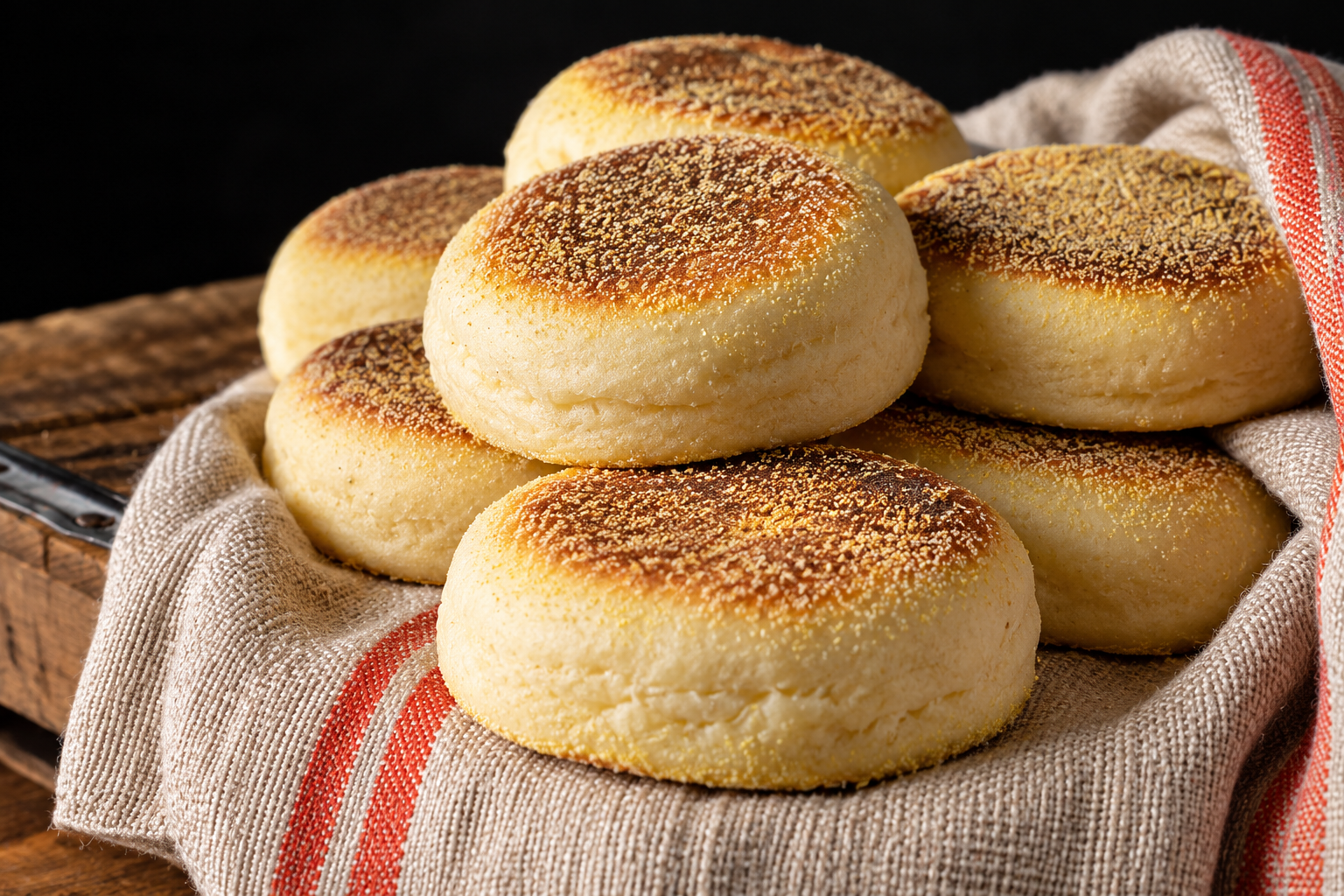
Sourdough English Muffins
Ingredients
Equipment
Method
- Mix the dough. In a large bowl, stir together the starter, milk, melted butter, and sugar. Add the flour and salt and mix until no dry flour remains.
- Knead. With wet or lightly oiled hands, knead for about 5 minutes until the dough is smooth, soft, and slightly tacky. Do not add extra flour.
- Ferment overnight. Cover the bowl and let it sit at room temperature (68 to 72°F) for 8 to 12 hours, until puffy, nearly doubled, and covered in bubbles.
- Add the baking soda. Dissolve the baking soda in 1 tablespoon water. Pour it over the dough and knead for about 1 minute until fully mixed in.
- Roll and cut. Dust the counter generously with cornmeal. Pat or roll the dough to ¾ inch thick. Cut 3-inch rounds, re-rolling the scraps once, to get 10 muffins.
- Rest. Place the rounds on a cornmeal-dusted tray, cover loosely, and let rest for 45 minutes until puffy.
- Cook. Heat a dry skillet or griddle over medium-low heat (about 325°F). Cook in batches for 7 to 8 minutes per side, until deep golden brown and about 205°F in the center. Lower the heat if they brown too quickly.
- Cool and split. Cool for at least 20 minutes. Split with a fork, toast the cut sides, and serve.
Notes
⦁ Timing: Ferment time depends on room temperature. In a warm kitchen it may be ready in 6 to 8 hours, so watch the dough.
⦁ Discard: Add ½ teaspoon instant yeast if using unfed discard, and expect a faster rise.
⦁ Storage: Airtight at room temperature up to 2 days, or in the fridge up to 5 days.
⦁ Freezing: Split, separate halves with parchment, and freeze up to 3 months. Toast from frozen.
⦁ Do-ahead: After kneading, rest 1 hour, then refrigerate 12 to 18 hours. Warm up for about 1 hour before shaping.